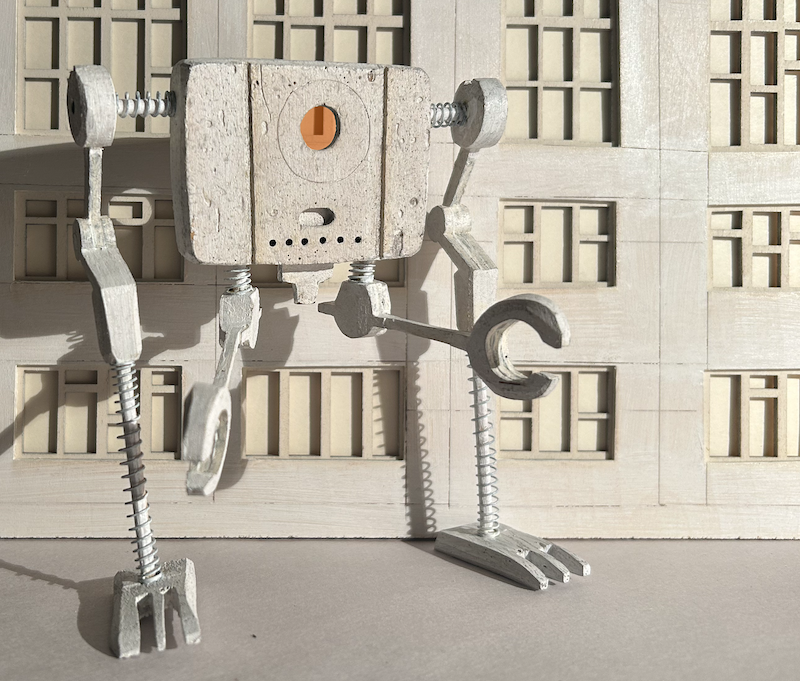
Upcoming Show: Solo Show, Chimera Arts Makerspace, October 1st.
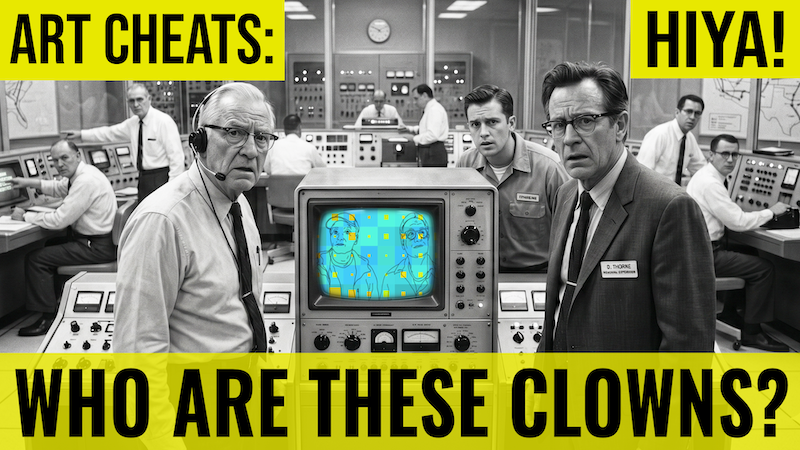
Check out the YouTube channel @artcheats. Painter Walt Morton and I prattle on about art and culture. New episode every week.
"I have been exhibiting here in Australia for 40 years now. The algorithm brought me here...You guys are absolutely hilarious and a breathe of fresh air. Love your takes on all things Art." Unsolicited praise
Josef Szuecs ( pronounced SOOCH )
As an artist operating at the intersection of two seemingly disparate worlds, my work bridges the precision of technology with the expressive depth of fine art. My practice explores the relationship between technological advancement and human cultural evolution, examining how the tools we create ultimately reshape how we think, communicate, and exist.
Technology is not merely a utility; it is a mirror of human desire and an accelerator of cultural change. By combining digital methodologies, such as algorithmically generated patterns, data visualization, and digital fabrication, with traditional fine art mediums like painting and sculpture, I create a dialogue between the organic and the synthetic.
Each piece serves as an artifact of our current era, capturing the friction and harmony between human intuition and machine logic. Through this hybrid approach, my work invites viewers to question how our tools are evolving us, and what parts of the human experience remain unchanged.
Josef Szuecs ( pronounced SOOCH )
As an artist operating at the intersection of two seemingly disparate worlds, my work bridges the precision of technology with the expressive depth of fine art. My practice explores the relationship between technological advancement and human cultural evolution, examining how the tools we create ultimately reshape how we think, communicate, and exist.
Technology is not merely a utility; it is a mirror of human desire and an accelerator of cultural change. By combining digital methodologies such as algorithmically generated patterns, data visualization, and digital fabrication with traditional fine art mediums like painting and sculpture, I create a dialogue between the organic and the synthetic.
Each piece serves as an artifact of our current era, capturing the friction and harmony between human intuition and machine logic. Through this hybrid approach, my work invites viewers to question how our tools are evolving us, and what parts of the human experience remain unchanged.